You understand the technologies, but exam questions still feel unfamiliar. The problem is usually not missing information — it is preparing for 350-401 ENCOR as a checklist instead of learning how enterprise networks actually make decisions.

The Biggest ENCOR Preparation Mistake: Studying the Exam Instead of Understanding the Environment
One of the most common preparation patterns seen among Cisco 350-401 ENCOR candidates is approaching the exam as if it were a large collection of individual technologies. A learner spends weeks reviewing routing protocols, wireless concepts, automation tools, security principles, and infrastructure design topics separately. The notes become longer, the number of videos completed increases, and the list of studied subjects looks impressive. Yet when practice questions introduce a situation involving multiple technologies working together, confidence often drops. The reason is simple: enterprise networking rarely exists as isolated pieces. A network engineer does not troubleshoot OSPF, access control, wireless authentication, or automation processes in separate boxes. These components interact inside a larger environment where every decision creates consequences.
The ENCOR exam reflects this reality. Cisco’s current certification approach focuses heavily on how professionals understand architecture, operation, and decision-making within enterprise networks. The official exam topics cover areas such as architecture, virtualization, infrastructure, network assurance, security, and automation, but the challenge is not just knowing definitions. The challenge is understanding why a design choice exists and what happens when conditions change. A candidate who only remembers what a technology does may struggle when asked why one approach is preferred over another in a specific enterprise scenario.
This difference explains why some candidates feel comfortable during study sessions but become uncertain during the actual exam experience. They recognize terms, remember commands, and understand individual concepts, but they have not trained themselves to connect information. Enterprise networking knowledge works more like a system map than a dictionary. You need to understand relationships between components, not just collect descriptions of each component.
A stronger preparation approach begins with a different question. Instead of asking, “What topics are on the exam?” ask, “What decisions does an enterprise network engineer need to make?” This small change affects how you study. Documentation becomes more meaningful because you are looking for design reasoning. Labs become more useful because you are testing behavior instead of simply confirming that a command works.
Why technology lists are not enough for enterprise networking exams
A topic checklist has value, but it should not become the entire preparation strategy. Candidates sometimes create a study process where every chapter is treated as a separate task to complete. They finish one technology, move to another, and assume progress equals readiness. This approach creates a knowledge collection without a strong connection between ideas.
Consider a typical enterprise scenario. A company introduces cloud connectivity, expands wireless access, applies security controls, and improves network visibility. These changes are not independent projects. Routing decisions affect availability. Security policies affect access. Monitoring affects troubleshooting speed. Automation affects operational consistency. The engineer responsible for the environment must understand these interactions.
That is the mindset ENCOR preparation should develop. Instead of asking only, “What is VXLAN?” or “What does SD-Access do?” you should also ask, “Why would an organization choose this architecture?” and “What problem is this technology solving?” Those questions move preparation closer to the type of thinking expected from enterprise networking professionals.
Why Old Preparation Habits Do Not Match the Current ENCOR Exam
Many traditional certification study habits were built around a simpler exam environment. A learner could read a book, memorize important commands, complete practice questions, and feel reasonably prepared. That method worked better when certification exams focused primarily on feature recognition. Modern enterprise networking certifications require broader understanding because network environments have become more integrated.
One common outdated habit is relying only on passive learning. Watching video courses and reading documentation are useful steps, but information consumption alone does not prove understanding. You can watch someone configure a technology and feel familiar with the process, yet still struggle when you need to analyze why a configuration creates a particular outcome. Learning happens when you actively interact with the information.
Another issue is avoiding troubleshooting practice. Some candidates spend significant time studying ideal configurations but rarely investigate failures. Enterprise engineers are often required to answer questions such as: Why is communication failing? Which component should be checked first? What design decision created this limitation? Without troubleshooting practice, preparation remains theoretical.
The same problem appears when candidates depend entirely on repeated question practice. Seeing hundreds of questions may create recognition ability, but recognition is different from reasoning. If the wording changes or the scenario becomes slightly different, memorized patterns may no longer help.
Cisco’s own learning resources encourage candidates to understand technologies through official documentation, training, and practical exploration. The Cisco Learning Network has long been used by candidates to discuss preparation experiences, exam expectations, and technical challenges. These discussions often highlight a similar theme: understanding concepts deeply matters more than simply collecting study materials.
The limits of passive learning methods
Passive learning creates a comfortable feeling because progress is easy to measure. You can count completed videos, finished chapters, or downloaded documents. However, those measurements do not always represent exam readiness.
A better measurement is whether you can explain technical decisions in your own words. Can you describe why a network design uses a particular approach? Can you identify possible causes when a service stops working? Can you compare two solutions based on operational requirements?
These abilities show that information has moved from short-term memory into usable knowledge. ENCOR preparation becomes stronger when every learning activity requires some form of analysis.
Practice Questions Are Useful — But Only When They Test the Right Things
Practice questions are one of the most debated parts of Cisco certification preparation. Some candidates avoid them because they believe they encourage memorization. Others depend on them almost completely. Both approaches miss the bigger picture.
Practice questions are not the problem. The problem is using the wrong type of practice.
High-quality practice questions act as a diagnostic tool. They reveal how you think, where your understanding is incomplete, and which topics require deeper review. A good question does not simply ask you to identify a definition. It creates a situation where you need to apply knowledge.
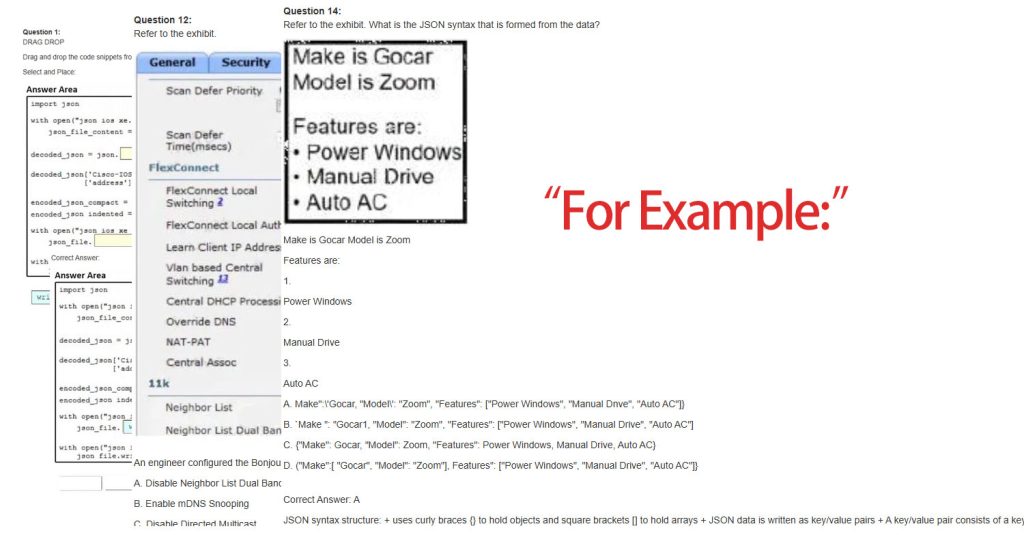
Low-value practice materials usually have predictable characteristics. They focus heavily on repeated wording, provide little explanation, or encourage candidates to remember answers without understanding the reason behind them. This type of practice may increase familiarity but does not necessarily improve exam performance.
Useful ENCOR practice questions should create a learning loop:
- Answer the question.
- Understand why the answer is correct.
- Analyze why other options are incorrect.
- Review the underlying technology.
- Connect the lesson to a broader network scenario.
The difference between question exposure and exam readiness
Completing a large number of questions can create confidence, but quantity alone is not a reliable measurement. The important factor is whether those questions force you to make decisions.
For example, a question asking for the definition of a protocol tests memory. A question describing a company’s network requirements and asking which architecture best fits those needs tests understanding.
The second type is closer to professional reasoning. It requires you to consider requirements, limitations, and consequences.
Candidates should also pay attention to explanations. If a practice platform only provides the correct answer without explaining the reasoning, the learning opportunity is limited. The explanation is often more valuable than the question itself because it teaches the thought process behind the decision.
What Candidates Should Look for Before Using Cisco 350-401 Practice Materials
Choosing preparation materials requires more attention than simply finding the largest question collection. The quality of practice resources directly affects how you measure your readiness. A poor resource can create false confidence by making the exam appear easier than it actually is.
Candidates evaluating Cisco 350-401 practice materials should consider several factors. The content should match current exam objectives, explanations should provide technical reasoning, and questions should reflect realistic enterprise scenarios. A good resource should help you discover weaknesses rather than simply confirm what you already know.
Candidates looking for additional exam practice can use platforms such as Leads4Pass 350-401 practice materials to evaluate their preparation level and identify areas that require additional review. The value of any practice resource depends on how it is used. It should support learning and assessment rather than replace technical understanding.
| Preparation Resource | Useful When | Limited When |
|---|---|---|
| Official Cisco documentation | Building accurate technical understanding | Used without practical application |
| Video courses | Learning complex concepts visually | Treated as the only study method |
| Practice questions | Testing readiness and finding weak areas | Used for answer memorization only |
| Labs and troubleshooting exercises | Developing decision-making ability | Ignored during preparation |
Building a Better 350-401 ENCOR Preparation Approach in 2026
A more effective ENCOR strategy does not require a complicated schedule. It requires better connections between different learning activities. Candidates should begin by understanding the official exam blueprint and identifying the major knowledge areas. This creates direction without turning preparation into a simple checklist.
The next step is building technical foundations. For many learners, ENCOR becomes easier when core networking concepts are already comfortable. This is where knowledge from certifications such as Cisco Certified Network Associate can provide useful preparation support.
After learning concepts, the focus should move toward application. Configure technologies, analyze failures, and ask why a particular solution works. The goal is not to create a perfect lab environment that copies a large enterprise network. The goal is to develop the ability to reason through technical situations.
Reviewing mistakes is another area where candidates often lose opportunities. When a practice question is answered incorrectly, the important question is not only “What is the correct answer?” It is “Why did my thinking lead me here?” Understanding the mistake prevents the same pattern from appearing again.
A strong preparation cycle looks like this:
- Learn a concept.
- Apply the concept.
- Test your understanding.
- Review mistakes.
- Revisit the related design principles.
This approach creates stronger exam readiness because it develops understanding instead of temporary familiarity.
How ENCOR Fits Into the Larger Cisco Certification Path
Cisco 350-401 ENCOR is an important part of the Cisco Certified Network Professional Enterprise path, but it should not be viewed as an isolated achievement. The exam represents a transition from foundational networking knowledge toward broader enterprise engineering responsibilities.
Candidates coming from a CCNA background often discover that ENCOR requires a different level of thinking. CCNA establishes important networking fundamentals, while ENCOR expects candidates to understand larger enterprise environments, architecture decisions, and operational considerations.
After completing ENCOR, many professionals continue with concentration exams related to areas such as automation, wireless, design, or advanced enterprise technologies. The important point is that ENCOR preparation should build a foundation that supports future learning rather than only focusing on passing one exam.
Thinking about the certification path this way changes preparation behavior. Instead of asking, “How do I pass 350-401?” candidates begin asking, “How do I develop the knowledge expected from an enterprise network professional?” That perspective creates more sustainable growth.
ENCOR Success Comes From Better Preparation Decisions
Cisco 350-401 ENCOR preparation in 2026 is less about collecting more study materials and more about improving how you learn. Candidates often struggle because they prepare for the exam format instead of developing the reasoning skills behind enterprise networking decisions.
Practice questions, courses, documentation, and labs all have value when they are used with the right purpose. A question bank should reveal weaknesses. Documentation should explain design choices. Labs should build confidence through investigation.
The strongest candidates are not necessarily those who study the longest. They are the ones who recognize the difference between knowing a technology and understanding how that technology fits into a larger network environment.
Frequently Asked Questions About Cisco 350-401 ENCOR Preparation
How long should I prepare for Cisco 350-401 ENCOR?
Preparation time depends on your networking background, professional experience, and available study time. Someone with strong enterprise networking experience may need less time than someone building knowledge from foundational concepts. The important factor is whether you can apply concepts rather than simply complete study materials.
Are ENCOR practice questions enough to pass the exam?
They are not enough. I have consistently emphasized the need to first build a comprehensive and in-depth understanding of the relevant topics. While practice questions help assess your preparation, they should be viewed as supplementary tools designed to foster deeper learning. Without that solid foundation, you may struggle when faced with questions that involve changing scenarios or require analysis rather than simple concept recognition.
Should I study CCNA topics before starting ENCOR?
A strong understanding of CCNA-level networking concepts can make ENCOR preparation smoother. You do not necessarily need to complete every CCNA resource again, but you should be comfortable with networking fundamentals before moving into enterprise-level concepts.
How can I know if I am ready for the ENCOR exam?
If you easily pass the Leads4Pass practice tests during your preparation, your pass rate will exceed 95%—and in reality, it could be even higher, given that the practice tests are more difficult than the actual exam.
What is the biggest mistake candidates make during ENCOR preparation?
The biggest mistake is treating ENCOR as a memorization challenge. The exam requires candidates to connect technologies, evaluate situations, and understand enterprise networking decisions. Preparation becomes more effective when learning focuses on relationships between concepts rather than isolated facts.